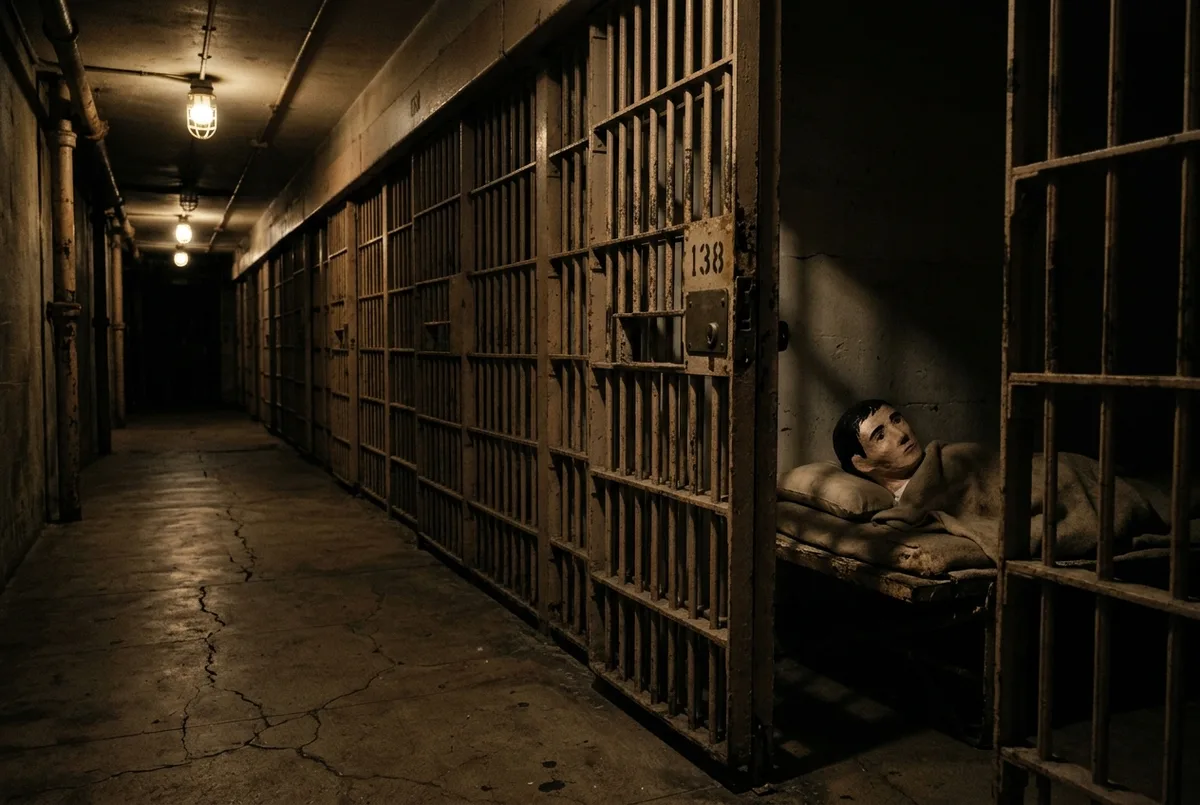
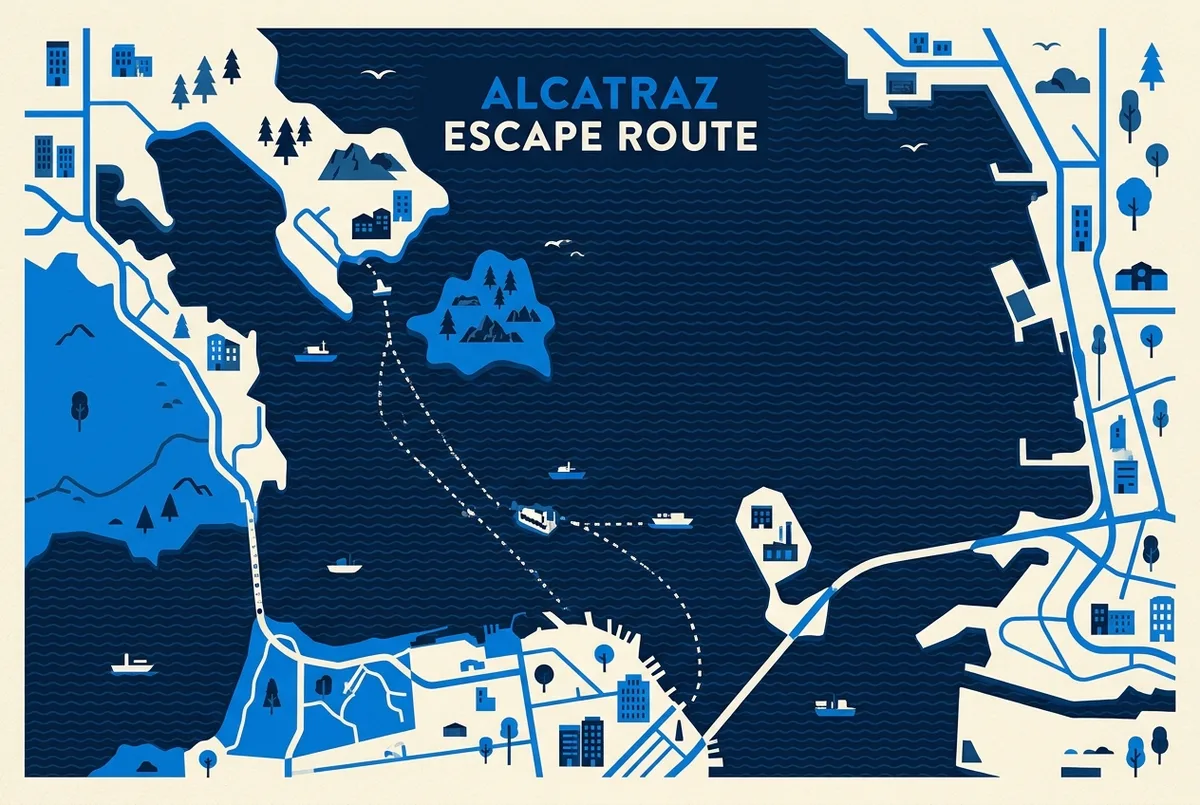
The 1962 Alcatraz escape is the single most famous breakout attempt in the prison’s history, and for good reason: it’s also the only one the FBI never definitively closed with recovered bodies. Frank Morris and brothers John and Clarence Anglin spent months secretly carving through their cell walls, built a makeshift raft from raincoats, and vanished into San Francisco Bay on the night of June 11, 1962. Here’s what I’d actually do with the story: separate the documented facts from the decades of speculation, because the real version is honestly more interesting than most retellings give it credit for. I’d read the full history of Alcatraz, from fort to federal penitentiary first if you want the escape in its proper context rather than as an isolated story.
Who actually escaped Alcatraz in 1962?
Frank Morris and brothers John and Clarence Anglin are the three men who disappeared from Alcatraz on the night of June 11, 1962, along with a fourth conspirator, Allen West, who was left behind when he couldn’t finish widening his own cell opening in time.
I’d call West’s part of the story almost as compelling as the three who got away. He’d done the same months of careful work as the others, chipping through the same ventilation grille material with the same improvised tools, and simply ran out of time on the final night. He survived and later gave investigators one of the most detailed firsthand accounts of how the whole plan actually worked.
How did the inmates get out of their cells?
The men spent months using spoons and improvised tools to enlarge ventilation openings at the back of their cells, then concealed the growing gaps behind cardboard grilles painted to match the cell wall.
I think this is the part that still impresses people most once they hear the real mechanics. It wasn’t a single dramatic moment; it was a slow, disciplined months-long project done a few minutes at a time, hidden behind handmade fake dummy heads left on their pillows during nightly checks so guards would assume they were simply asleep.
What did the escapees actually use to cross the bay?
The three men built a raft and life vests from more than 50 stolen raincoats, sealed with heat from stolen steam pipes, a genuinely resourceful improvised solution given what little access they had to real materials.
I’d say this detail alone tells you how seriously planned the whole escape was. This wasn’t a desperate, last-minute dash. It was a constructed, if crude, flotation system built specifically to survive the same cold, fast currents that had made every escape attempt before theirs fail.
Did Frank Morris and the Anglin brothers survive?
Officially, no. The FBI closed its investigation in 1979 concluding the three men most likely drowned attempting the crossing, given the bay’s cold water and strong currents.
I wouldn’t present that as settled fact, though, because it genuinely isn’t treated that way by everyone. No bodies were ever recovered, and a handful of pieces of evidence, including a later-discovered personal item some investigators tied to one of the men, have kept real doubt alive for decades. I’d call this an open question with an official answer, not a closed case with no debate left.
What evidence suggested they might have survived?
Some investigators pointed to reports of a car theft near the bay shortly after the escape and later unverified sightings claimed by family members, though none of it amounts to conclusive proof either way.
I’d treat all of this as suggestive rather than confirmed. Family members of the Anglin brothers have spoken publicly over the years about believing their relatives survived, and that’s a real, human part of this story. But suggestive family accounts and a disputed photograph are a long way from hard evidence, and I wouldn’t oversell either side of the debate.
How does this compare to the prison’s other escape attempts?
Fourteen escape attempts happened across Alcatraz’s 29 years as a federal penitentiary, involving 36 different inmates, and the 1962 attempt is the only one where the outcome remains genuinely unresolved.
I’d say that’s exactly why this specific attempt dominates the island’s popular reputation over the other thirteen. Every other attempt ended with a clear, documented outcome: inmates recaptured, killed, or confirmed drowned. This one simply didn’t, and that open-ended quality is a big part of why it still gets retold more than six decades later.
Why did Alcatraz’s isolation make escape so difficult to begin with?
The cold water and fast currents of San Francisco Bay were always the prison’s real security system, arguably more effective than the walls and guards themselves, since even a successful breakout from the cellhouse still left inmates facing a dangerous open-water crossing.
I think this is worth understanding before judging any of the fourteen attempts too harshly. How Alcatraz went from a military fort to the federal penitentiary people remember covers why the government specifically chose this island for its isolation long before 1962, and that context makes the Morris and Anglin plan look even more audacious than it already does on its own.
Did Al Capone have any connection to this escape?
No direct connection. Capone had already left Alcatraz decades earlier and was no longer alive by 1962, so his story and the 1962 escape are separate chapters of the island’s history that simply happened to share the same cellhouse walls.
I’d still recommend reading about his actual time there if the broader prison story interests you. The real record of Al Capone’s years on Alcatraz versus the exaggerated legend covers a very different, equally misunderstood piece of the same building’s history.
How long did the planning actually take before the escape night?
Investigators later determined the men had been working on their escape plan for several months, slowly widening the ventilation openings a little at a time during evening hours when checks were less frequent.
I’d emphasize the word slowly here, because it matters. This wasn’t an improvised, spur-of-the-moment dash for the door. It was closer to a long-running construction project carried out a few scrapes at a time, which is exactly why the fake dummy heads and the painted cardboard grilles held up under nightly inspection for as long as they did without anyone noticing.
Has this escape influenced how people talk about Alcatraz being haunted?
Yes, somewhat. The uncertainty around whether the men survived feeds naturally into the island’s broader ghost-story tradition, since an unresolved disappearance tends to generate more folklore than a clearly closed case ever does.
I wouldn’t conflate the two directly, though. The escape is a documented historical event with real investigative evidence either way. Whether Alcatraz is actually haunted is a separate question built on staff and visitor reports, not on this specific escape, even though the two threads do get mentioned together often enough.
My actual take on what really happened in 1962
I’d call it the closest thing to a genuine unsolved mystery connected to Alcatraz. The planning was real, methodical, and documented in detail, and the outcome, officially presumed drowned, is the most likely explanation given the bay’s conditions, even though it was never proven with recovered remains.
For the official federal case file background, the FBI’s own history pages cover how the Bureau approached decades-old cases like this one. If the full story of the island this escape happened on interests you more broadly, the complete Alcatraz history timeline is where I’d go next.
Frequently asked questions
Who escaped from Alcatraz in 1962?
Frank Morris and brothers John and Clarence Anglin disappeared on the night of June 11, 1962, after months of secretly widening their cell ventilation openings.
Did the 1962 Alcatraz escapees survive?
Officially, the FBI concluded they likely drowned, but no bodies were ever recovered, which has kept genuine debate alive for decades.
How did the inmates get past the guards?
They left papier-mache dummy heads on their pillows to fool nightly bed checks while they worked on their escape through hidden wall openings.
What did they use to cross San Francisco Bay?
A homemade raft and life vests built from more than 50 stolen raincoats, sealed using heat from stolen steam pipes.
Was anyone caught during the 1962 escape attempt?
Yes. A fourth conspirator, Allen West, was left behind when he couldn’t finish widening his own cell opening before the group left.
See the Alcatraz tickets that bring this story to life →